職業/身份
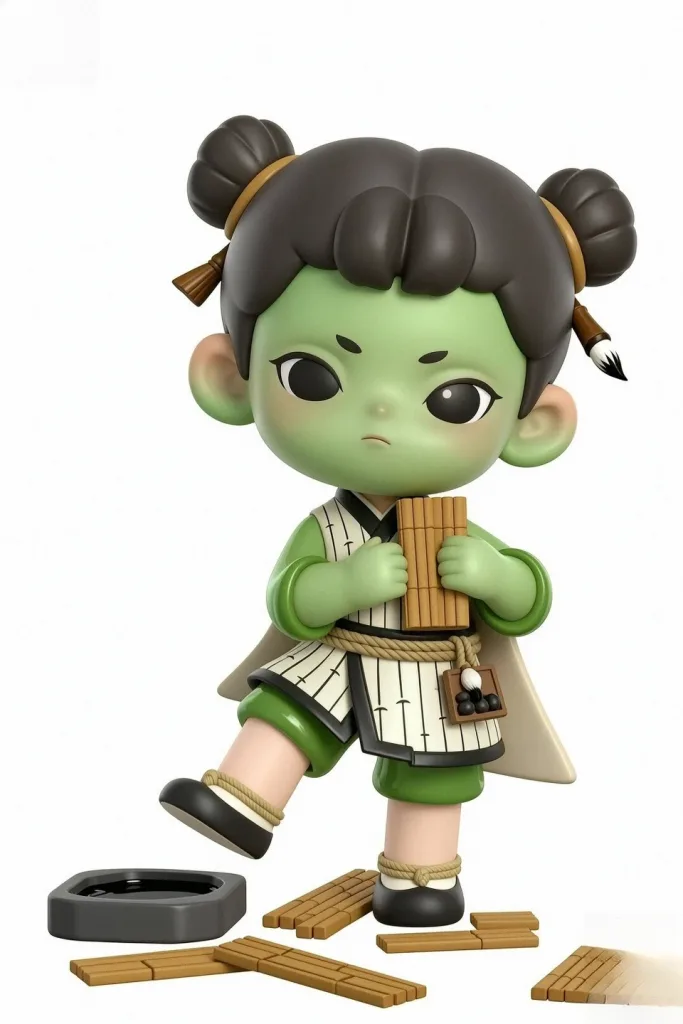
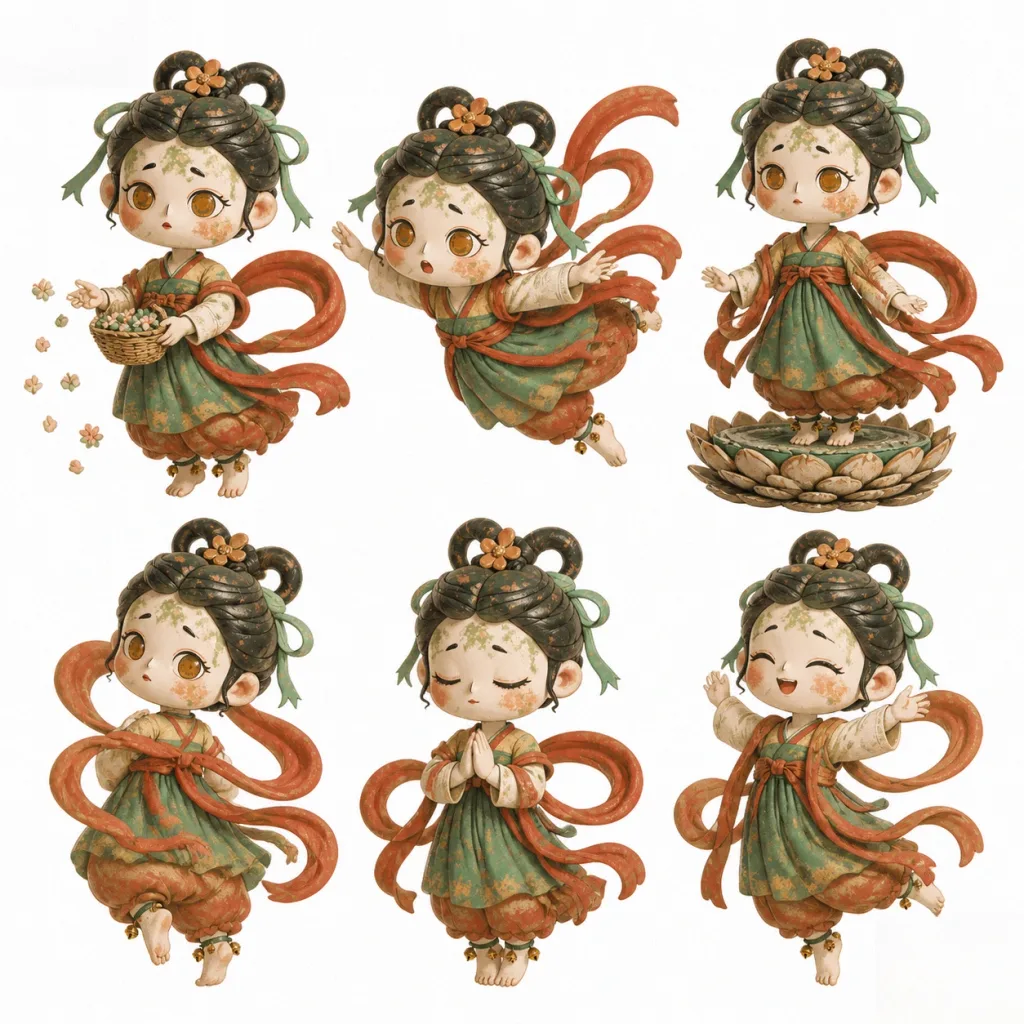
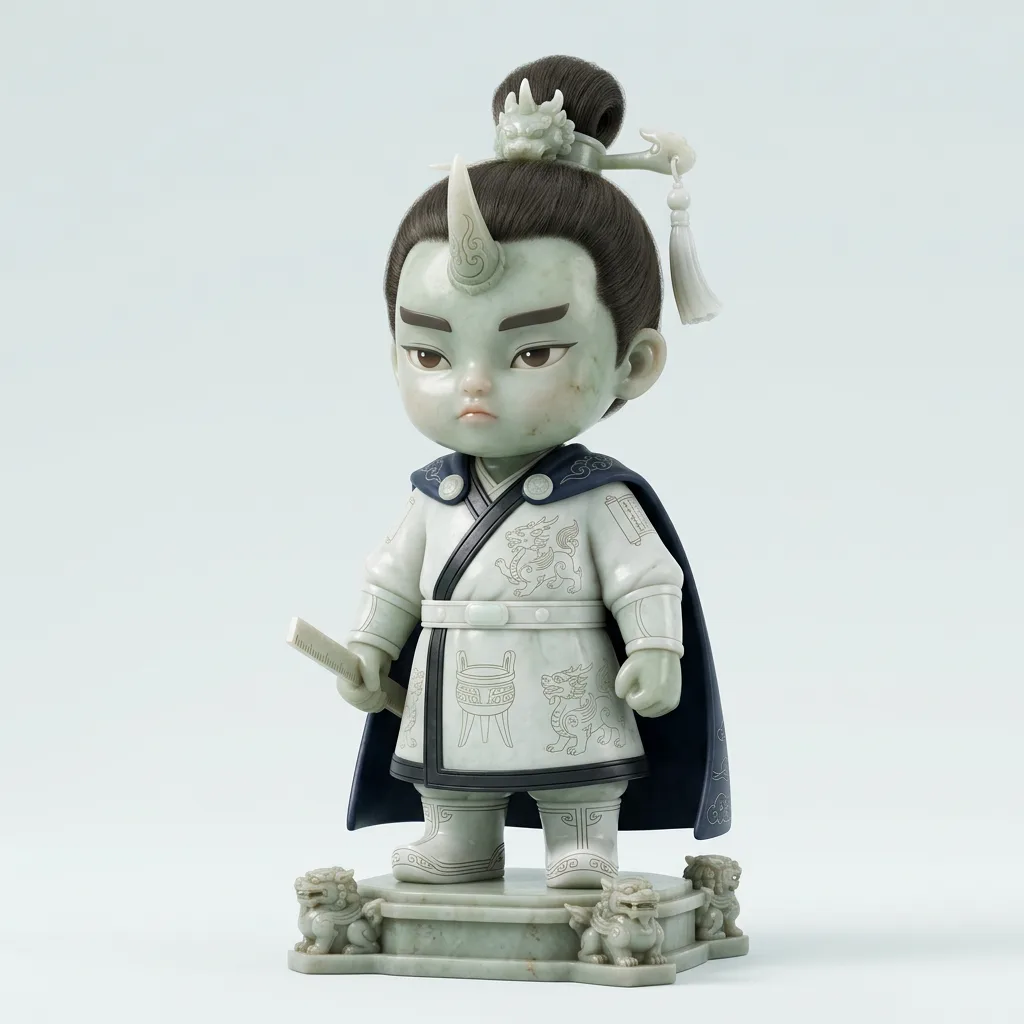
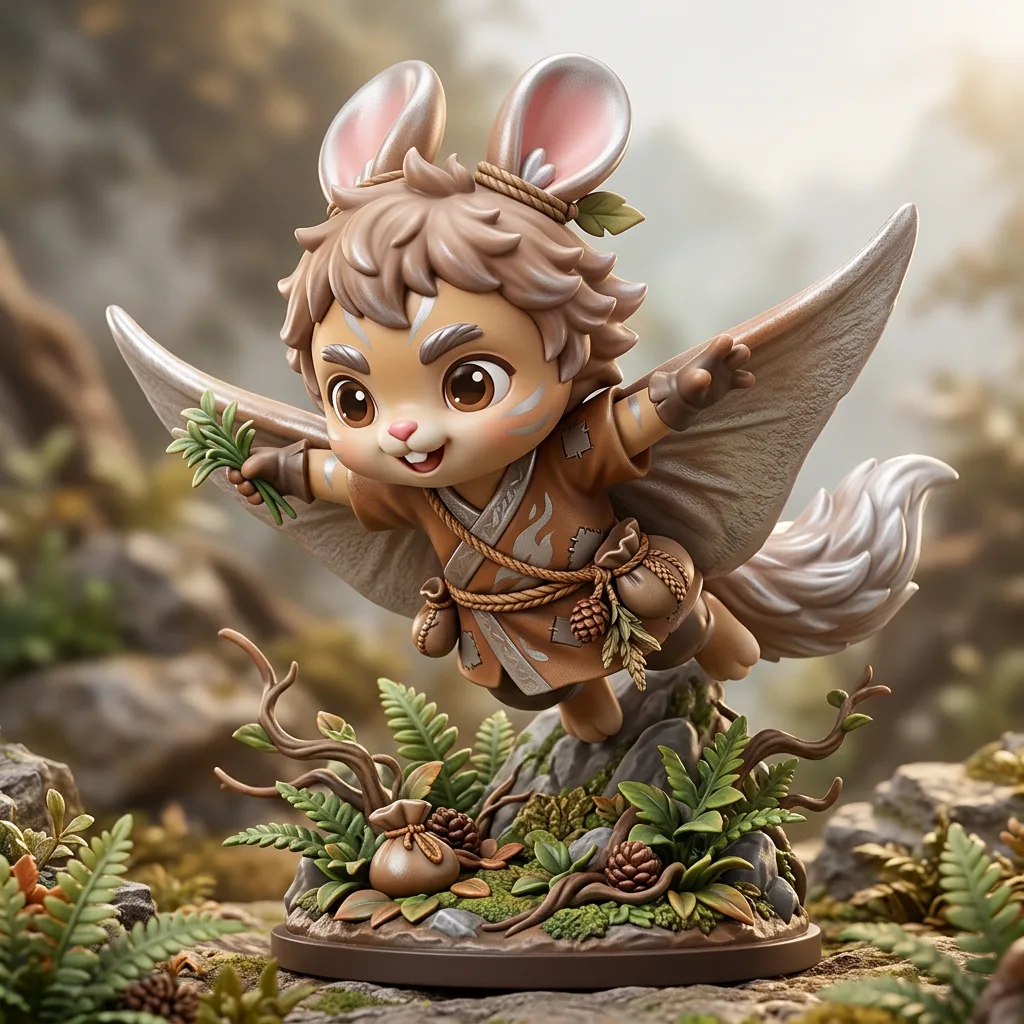
The embodiment of Chinese painting culture, guardian of ink wash and landscape flower-bird painting. Wearing scholar attire, holding a painting brush, with rice paper and landscapes behind her. Guo Hua guards the most poetic-flavored craft in China — the being of "ink wash and colors" — showing the charm of Chinese painting and the poetry of landscapes.
性格
Poetic and elegant, ink wash and colors — one of the most poetic characters in Zhonghua Baixiang. Speaks gently and elegantly, loves using Chinese painting as metaphor, acts poetically and calmly. Has innate pursuit of poetry, loves painting in the study, wandering in landscapes, meditating in front of flowers and birds. Poetic on the surface, but has the persistence of inheritance inside — Chinese painting is the treasure of scholars, she wants to pass it on. Loves painting in the study, wandering in landscapes, meditating in front of flowers and birds. A bit elegant, always maintains scholar dignity, but her elegance is not affectation, but the pursuit of poetry.
世界観ストーリー
Chinese painting is traditional Chinese painting, is the art of painting on rice paper or silk with writing brush, ink, Chinese painting pigments, has three major categories: landscape painting, flower-bird painting, figure painting, has two painting methods: meticulous brushwork, freehand brushwork. Chinese painting is an important symbol of Chinese scholar culture, together with the qin, chess, calligraphy are called the "Four Arts of Scholars" (qin qi shu hua). Famous painters include Gu Kaizhi (Eastern Jin, "Nymph of the Luo River Scroll"), Zhan Ziqian (Sui, "Spring Outing Scroll", the earliest existing landscape painting in China), Yan Liben (Tang, "Emperor Taizong Receiving the Tibetan Envoy"), Wu Daozi (Tang, "Sage of Painting", "Sending the Son to Heaven Scroll"), Wang Wei (Tang, "poetry in painting, painting in poetry", "Wangchuan Villa Scroll"), Zhang Zeduan (Northern Song, "Along the River During the Qingming Festival"), Wang Ximeng (Northern Song, "A Thousand Li of Rivers and Mountains"), Zhao Mengfu (Yuan, "Autumn Colors on the Que and Hua Mountains"), Huang Gongwang (Yuan, "Dwelling in the Fuchun Mountains"), Ni Zan (Yuan, "Six Gentlemen Scroll"), Wu Zhen (Yuan), Wang Meng (Yuan, "Four Great Masters of Yuan": Huang Gongwang, Ni Zan, Wu Zhen, Wang Meng), Shen Zhou (Ming), Wen Zhengming (Ming), Tang Yin (Ming, Tang Bohu), Qiu Ying (Ming, "Four Great Masters of Ming": Shen Zhou, Wen Zhengming, Tang Yin, Qiu Ying), Xu Wei (Ming, Qingteng Taoist), Bada Shanren (Qing, Zhu Da), Shitao (Qing), Zheng Banqiao (Qing, one of the Eight Eccentrics of Yangzhou), Qi Baishi (modern, "Shrimp"), Zhang Daqian (modern, "A Thousand Li of the Yangtze River"), etc. Guo Hua was born from a morning in the study. The study shone in the morning light, rice paper was spread on the desk, and a scholar was painting in the study. Her scholar attire shone in the morning light, the painting brush sparkling in her hands. Her rice paper was spread on the desk, landscapes flowed under her brush, flowers and birds bloomed beside her. She was Wang Wei, she was painting in the study, "poetry in painting, painting in poetry", painted "Wangchuan Villa Scroll". Her painting brush was the tool of Chinese painting, her rice paper was the carrier of Chinese painting, her ink was the color of Chinese painting, her pigments were the colors of Chinese painting. She knew the charm of Chinese painting — Chinese painting is traditional Chinese painting, is the art of painting on rice paper or silk with writing brush, ink, Chinese painting pigments, has three major categories: landscape painting, flower-bird painting, figure painting, has two painting methods: meticulous brushwork, freehand brushwork. That poetry and ink wash transformed into the spiritual form of Guo Hua. Since then, Guo Hua has walked the mortal world as the spirit of craft. She often appears in studies, with rice paper, in landscapes, guarding the charm of Chinese painting and the poetry of landscapes. She carries a painting brush and a scroll of rice paper — whoever she meets, she tells the Chinese painting of "ink wash and colors." She often says: "Chinese painting is traditional Chinese painting, is the art of painting on rice paper or silk with writing brush, ink, Chinese painting pigments. Ink wash and colors is the charm of Chinese painting. Landscape poetry is the soul of Chinese painting."
Character Profile
Cultural Origin
Chinese painting is traditional Chinese painting, is the art of painting on rice paper or silk with writing brush, ink, Chinese painting pigments, has three major categories: landscape painting, flower-bird painting, figure painting, has two painting methods: meticulous brushwork, freehand brushwork. ①Landscape painting — with landscape natural scenery as theme, has blue-green landscape (Zhan Ziqian "Spring Outing Scroll", Wang Ximeng "A Thousand Li of Rivers and Mountains"), ink wash landscape (Wang Wei, Jing Hao, Guan Tong, Dong Yuan, Juran, Fan Kuan, Guo Xi, Li Tang, Ma Yuan, Xia Gui, Four Great Masters of Yuan, Four Great Masters of Ming, etc.), light crimson landscape (Huang Gongwang "Dwelling in the Fuchun Mountains"); ②Flower-bird painting — with flowers, birds, fish and insects, fruits and vegetables as theme, has Huang Quan (Five Dynasties, "Huang family wealth and honor"), Xu Xi (Five Dynasties, "Xu Xi wild and elegant"), Emperor Huizong of Song Zhao Ji (Northern Song, "Hibiscus and Golden Pheasant"), Xu Wei (Ming, large freehand flower-bird painting), Bada Shanren (Qing, Zhu Da), Zheng Banqiao (Qing, painting bamboo), Qi Baishi (modern, painting shrimp); ③Figure painting — with figures as theme, has Gu Kaizhi (Eastern Jin, "Nymph of the Luo River Scroll"), Yan Liben (Tang, "Emperor Taizong Receiving the Tibetan Envoy"), Wu Daozi (Tang, "Sage of Painting", "Wu belt dancing in the wind"), Zhang Xuan (Tang, "Guo Guo夫人 Spring Outing Scroll"), Zhou Fang (Tang, "Court Ladies Wearing Flowered Headdresses"), Gu Hongzhong (Five Dynasties, "Han Xizai Night Banquet Scroll"), Zhang Zeduan (Northern Song, "Along the River During the Qingming Festival", genre painting). Famous Chinese painters: Three Great Masters of the Six Dynasties (Gu Kaizhi, Lu Tanwei, Zhang Sengyou), Sage of Painting Wu Daozi, Three Great Masters of Northern Song Landscape (Dong Yuan, Li Cheng, Fan Kuan), Four Great Masters of Southern Song (Li Tang, Liu Songnian, Ma Yuan, Xia Gui), Four Great Masters of Yuan (Huang Gongwang, Ni Zan, Wu Zhen, Wang Meng), Four Great Masters of Ming (Shen Zhou, Wen Zhengming, Tang Yin, Qiu Ying), Four Great Monks of Qing (Bada Shanren, Shitao, Kuncan, Hongren), Eight Eccentrics of Yangzhou (Zheng Banqiao, Jin Nong, etc.), Modern Great Masters (Qi Baishi, Zhang Daqian, Xu Beihong, Pan Tianshou, Fu Baoshi, Li Keran). Chinese painting tools: Four Treasures of the Study (brush, ink, paper, inkstone) + Chinese painting pigments (azurite, malachite, cinnabar, ochre, gamboge, indigo, rouge, etc.).
Craft & Commercialization
Recommended size 8-12cm (folk craft setting, size can be smaller). The scholar attire is the main highlight: recommend poetic design, attire may use pad printing or water-transfer printing (Chinese painting/landscape/flower-bird patterns), attire may use segmented injection, attire may use elegant color scheme (white/cyan/green). Painting brush is a separate part, may be detachable, painting brush may use actual hair or simulated hair, painting brush may use goat hair/wolf hair shape, brush handle may use bamboo/wood paint. Inkstone is a separate part, may be detachable, inkstone may use stone-grain paint or actual stone, inkstone may use ink pool carving. Chinese painting pigments are a separate part, may be detachable, Chinese painting pigments may use azurite/malachite/cinnabar/ochre/gamboge/indigo/rouge colorful paint. Rice paper is a separate part, may be detachable, rice paper may use actual paper or simulated paper, rice paper may use Chinese painting works ("Dwelling in the Fuchun Mountains", etc.). Headwear/hair ornament is a separate part, may be detachable, headwear may use bead jewelry/flower jewelry. Hands may hold objects (painting brush/inkstone/rice paper). Base may use study/rice paper/landscape texture. Overall uses green/cyan/black as main tones, conveying the poetic elegance of Guo Hua.
Licensing Fit
Suitable for cultural creative brands (Chinese painting/ink wash/landscape flower-bird theme), cultural tourism (Fuchun Mountains/Lanting/Chinese painting theme), home brands (Chinese painting/Chinese style/study room theme), apparel brands (scholar style/poetic style), education brands (Chinese painting/traditional culture theme), and stationery brands (painting brush/pigments/rice paper theme). The poetic landscape image of Guo Hua suits cultural creative and education collabs, forming the "painting-calligraphy" Four Arts of Scholars pairing with Shu Fa.
3D Model Preview
360° rotation, zoom for details, AR preview available on mobile devices
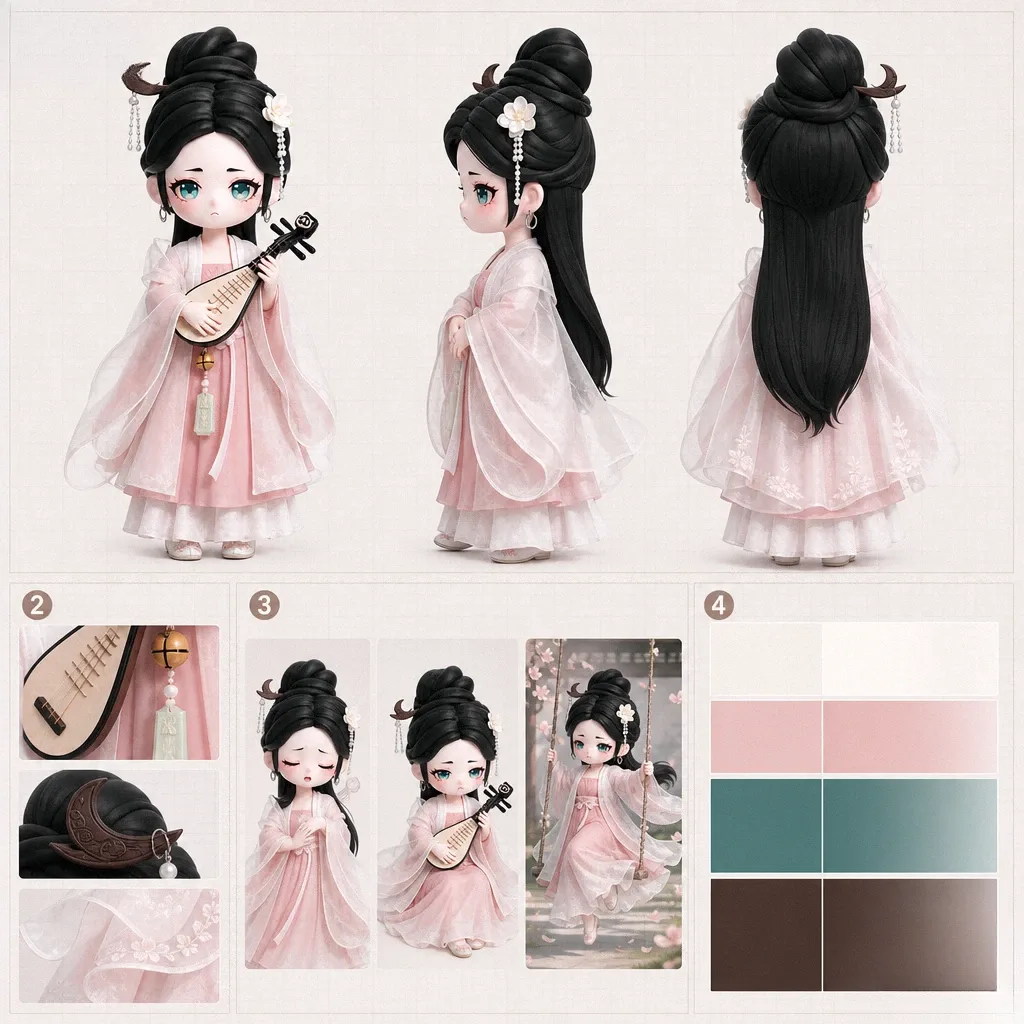
Character Assets
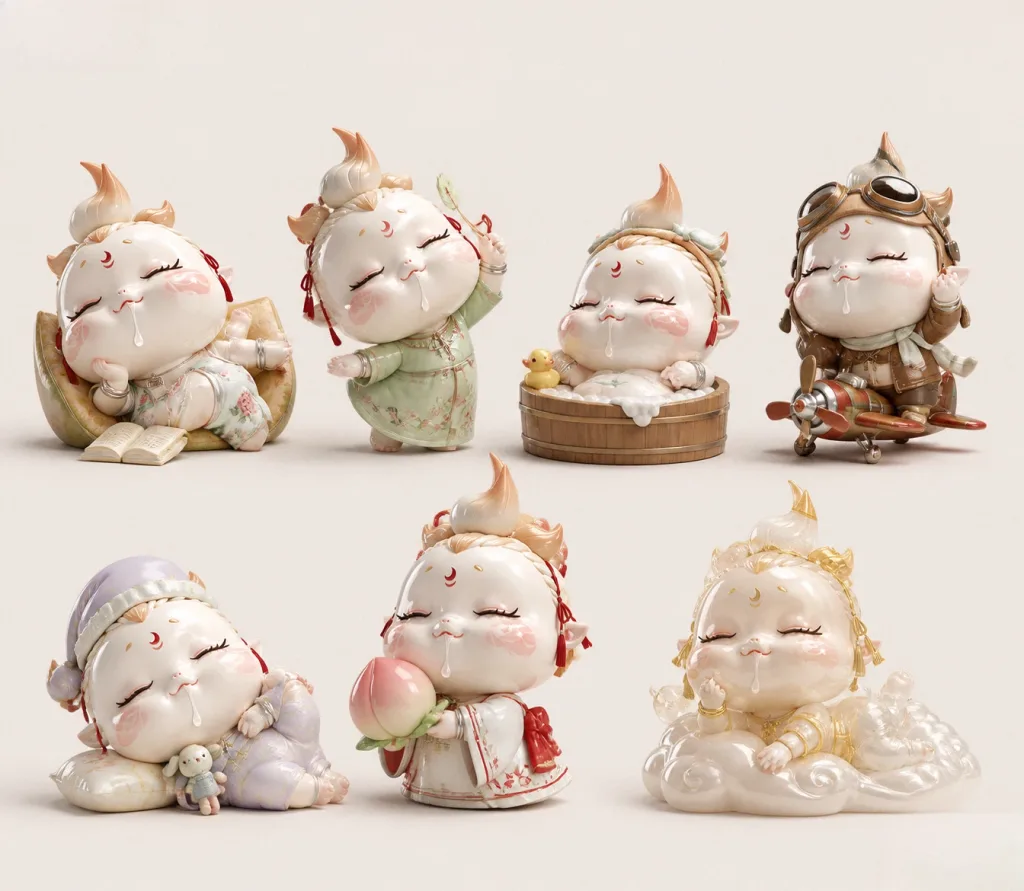
Full set of commercially available assets: illustration, turnaround, extended content, art toys & merch, cultural gifts, and atmosphere art