직업/신분
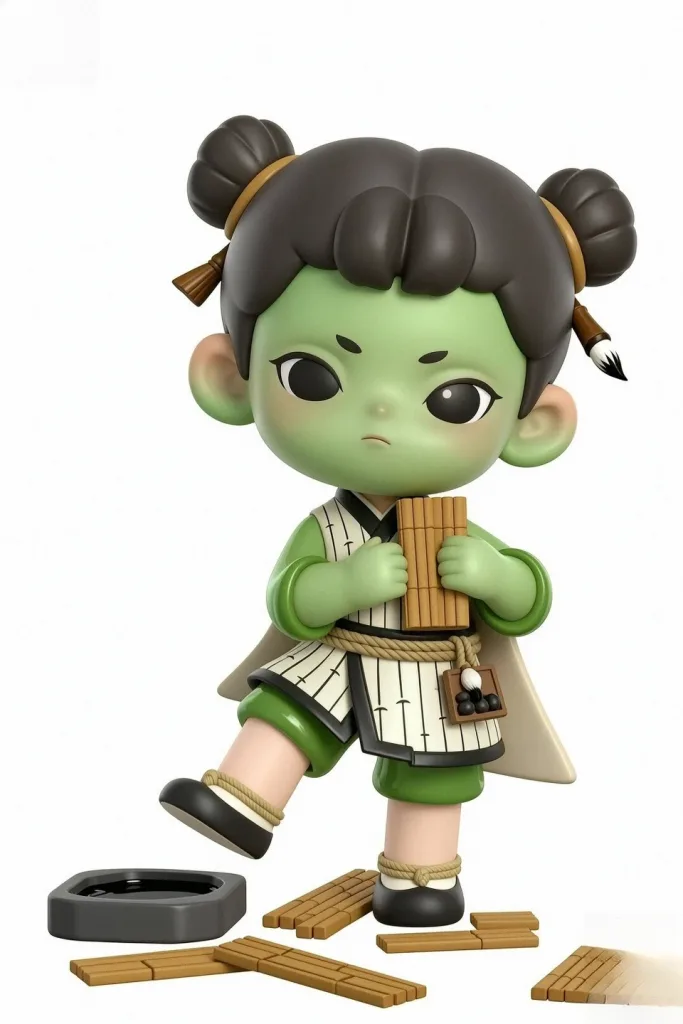
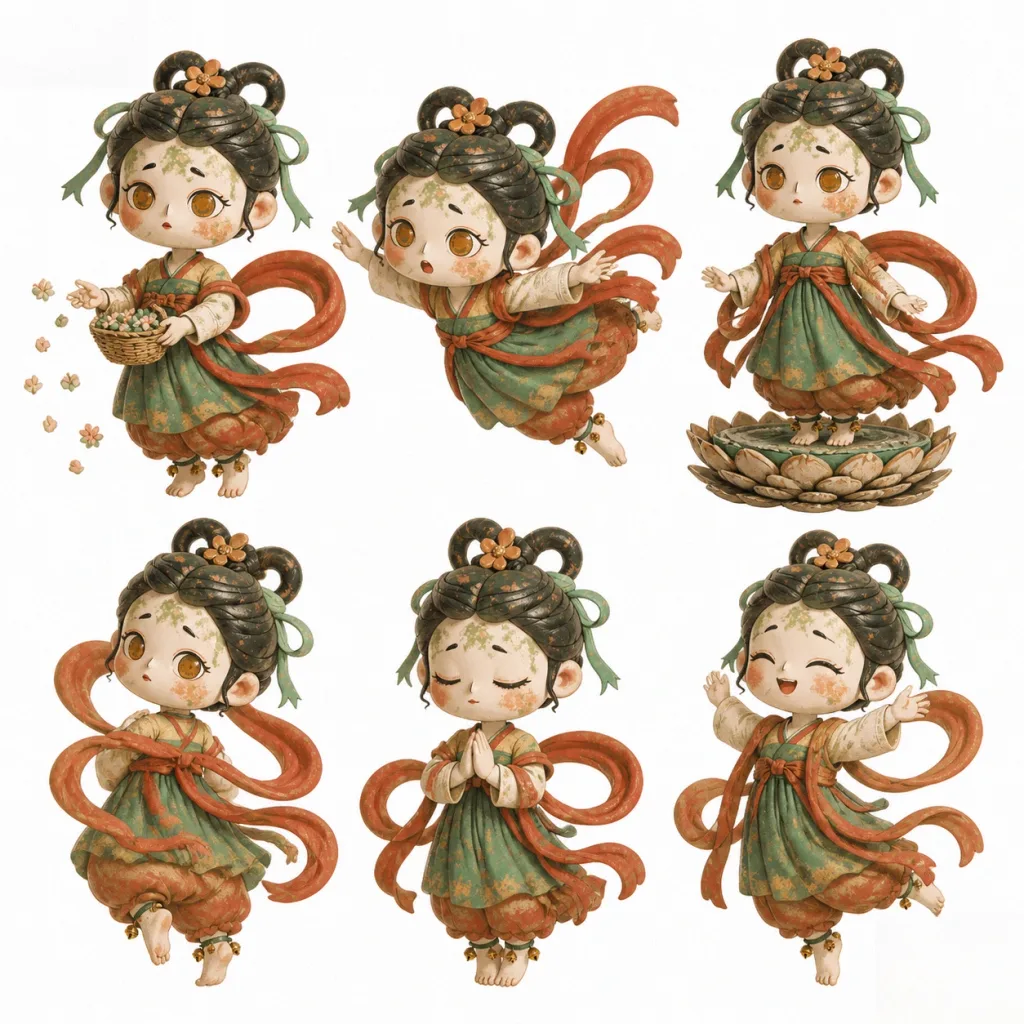
The embodiment of Chinese silk culture, guardian of the Silk Road and Su embroidery. Wearing silk attire, holding a weaving shuttle, with looms and the Silk Road behind her. Si Chou guards the most silk-flavored craft in China — the being of "the Silk Road, Su embroidery and Hangzhou gauze" — showing the beauty of silk and the excellence of craftsmanship.
성격
Gentle and exquisite, silk flavor — one of the most silk-flavored characters in Zhonghua Baixiang. Speaks gently and forcefully, loves using silk as metaphor, acts exquisitely and patiently. Has innate pursuit of silk flavor — she is the guardian of the Silk Road, the inheritor of Su embroidery. Gentle on the surface, but has the pursuit of craftsmanship inside — she is not only a craft, but also the guardian of silk flavor. Loves weaving in front of the loom, wandering on the Silk Road, advancing in silk flavor. A bit gentle, always maintains the focus of a weaver, but her gentleness is not weakness, but the persistence of craftsmanship.
세계관 스토리
Silk is one of the greatest inventions in China, is a fabric woven from silk threads. China is the hometown of silk, the invention of silk has a history of over 5000 years (legend says Lei Zu invented sericulture and silk reeling). Chinese silk has varieties such as brocade (multicolored jacquard silk fabric, such as Yunjin, Shu brocade, Song brocade, Zhuang brocade), satin (satin weave silk fabric, such as plain satin, patterned satin), twill silk (twill weave silk fabric), gauze (leno weave silk fabric, such as Hangzhou gauze), sheer silk (sparse silk fabric), raw silk (raw silk fabric), crepe (crinkled silk fabric), plain silk (plain weave silk fabric), kesi (warp-through weft-cutting silk fabric), etc. The Silk Road was the trade route between ancient China and the West, named after the silk trade, has the Land Silk Road (starting from Chang an, through the Hexi Corridor, the Western Regions, reaching Central Asia, West Asia, Europe) and the Maritime Silk Road (starting from ports such as Guangzhou, Quanzhou, Ningbo, through Southeast Asia, the Indian Ocean, reaching Arabia, Africa, Europe). Si Chou was born from a morning at the loom. The loom shone in the morning light, silk was woven on the loom, and a weaver was weaving in front of the loom. Her silk attire shone in the morning light, the weaving shuttle sparkling in her hands. Her loom stood behind her, the Silk Road extended in front of her, silk flavor弥漫 beside her. She was a weaver, she wove in front of the loom, wandered on the Silk Road, advanced in silk flavor. Her weaving shuttle was the tool of silk, her silk was the treasure of China, her Silk Road was the channel of China. She knew the flavor of silk — silk is one of the greatest inventions in China, China is the hometown of silk, the Silk Road was the trade route between ancient China and the West, Su embroidery, Hangzhou gauze, Yunjin, Shu brocade are representatives of Chinese silk. That gentleness and flavor of silk transformed into the spiritual form of Si Chou. Since then, Si Chou has walked the mortal world as the spirit of craft. She often appears at looms, on the Silk Road, at Su embroidery, guarding the flavor of silk and the excellence of craftsmanship. She carries a weaving shuttle and a piece of silk — whoever she meets, she tells the craft of "the Silk Road, Su embroidery and Hangzhou gauze." She often says: "Silk is one of the greatest inventions in China, China is the hometown of silk. The Silk Road is our channel, Su embroidery and Hangzhou gauze are our treasures. Silk flavor is our breath. Craftsmanship is our soul."
Character Profile
Cultural Origin
Silk is one of the greatest inventions in China, is a fabric woven from silk threads. China is the hometown of silk, the invention of silk has a history of over 5000 years (legend says Lei Zu invented sericulture and silk reeling, "Lei Zu first sericulture"). ①Origin — silk originated in the Neolithic Age, in 1958 silk fabrics (silk pieces, silk ribbons, silk threads) dating back over 4700 years were discovered at the Qianshanyang site in Huzhou, Zhejiang, are the earliest silk fabrics in the world; legend says Lei Zu (Huang Di primary consort) invented sericulture and silk reeling, was revered as the "First Silkworm Goddess"; ②Varieties — Chinese silk has brocade (multicolored jacquard silk fabric, such as Nanjing Yunjin, Chengdu Shu brocade, Suzhou Song brocade, Guangxi Zhuang brocade "four famous brocades"), satin (satin weave silk fabric, such as plain satin, patterned satin, gold-woven satin), twill silk (twill weave silk fabric, such as plain twill, patterned twill), gauze (leno weave silk fabric, such as Hangzhou gauze, Suzhou gauze), sheer silk (sparse silk fabric, such as plain sheer, patterned sheer), raw silk (raw silk fabric, such as plain raw, patterned raw), crepe (crinkled silk fabric, such as double crepe, bi crepe), plain silk (plain weave silk fabric, such as plain silk, patterned silk), kesi (warp-through weft-cutting silk fabric, such as Suzhou kesi), velvet (pile silk fabric, such as Zhangzhou velvet, velvet), etc.; ③Four famous embroideries — Chinese embroidery has Su embroidery (Suzhou, double-sided embroidery, random stitch embroidery), Xiang embroidery (Hunan, lion and tiger embroidery), Yue embroidery (Guangdong, gold and silver thread embroidery), Shu embroidery (Sichuan, hibiscus and carp embroidery) "four famous embroideries", Su embroidery is the first of the four famous embroideries; ④Silk Road — Land Silk Road: in the Western Han dynasty Zhang Qian was sent as envoy to the Western Regions (138 BC, 119 BC), opened the trade route starting from Chang an (modern Xi an), through the Hexi Corridor (Wuwei, Zhangye, Jiuquan, Dunhuang), the Western Regions (Loulan, Qiuci, Shule, Yutian), Central Asia (Dayuan, Kangju, Da Yuezhi), West Asia (Anxi, Tiaozhi), reaching Europe (Da Qin, i.e. the Roman Empire), named after the silk trade, reached its peak in the Tang dynasty, prospered again in the Yuan dynasty; Maritime Silk Road: starting from ports such as Guangzhou, Quanzhou, Ningbo, Yangzhou, through Southeast Asia (Vietnam, Thailand, Malaysia, Indonesia), the Indian Ocean (Sri Lanka, India), the Arabian Sea (Arabia, Iran), the Red Sea (Egypt), reaching the east coast of Africa and Europe, rose in the Tang dynasty, flourished in the Song and Yuan dynasties, reached its peak with Zheng He voyages to the Western Ocean in the Ming dynasty; ⑤Cultural exchange on the Silk Road — the Silk Road was not only a trade channel, but also a cultural exchange channel, Buddhism (spread from India to China), Islam (spread from Arabia to China), Nestorianism (Christian Nestorian, spread from Persia to China), Manichaeism (spread from Persia to China) and other religions spread to China through the Silk Road; Chinas "four great inventions" of papermaking, printing, gunpowder, compass spread to the West through the Silk Road; Western music, dance, painting, sculpture, architecture and other arts spread to China through the Silk Road; ⑥Influence of silk — silk had a profound influence on Chinese culture, "a country of clothing, a country of etiquette", silk is the foundation of Chinese clothing culture; silk had a profound influence on world culture, the Roman Empire called China the "Silk Country" (Seres), the Byzantine Empire, the Arab Empire, European countries all learned Chinese silk technology; ⑦Modern silk — China is the worlds largest silk producer and exporter, silk production accounts for over 80% of the world, Zhejiang, Jiangsu, Sichuan, Guangdong are the main silk producing areas in China, Hangzhou, Suzhou, Chengdu, Guangzhou are the main silk cities in China. Silk is one of the greatest inventions in China, is an important symbol of Chinese culture, the Silk Road, four famous brocades, four famous embroideries, etc. are important representatives of Chinese silk.
Craft & Commercialization
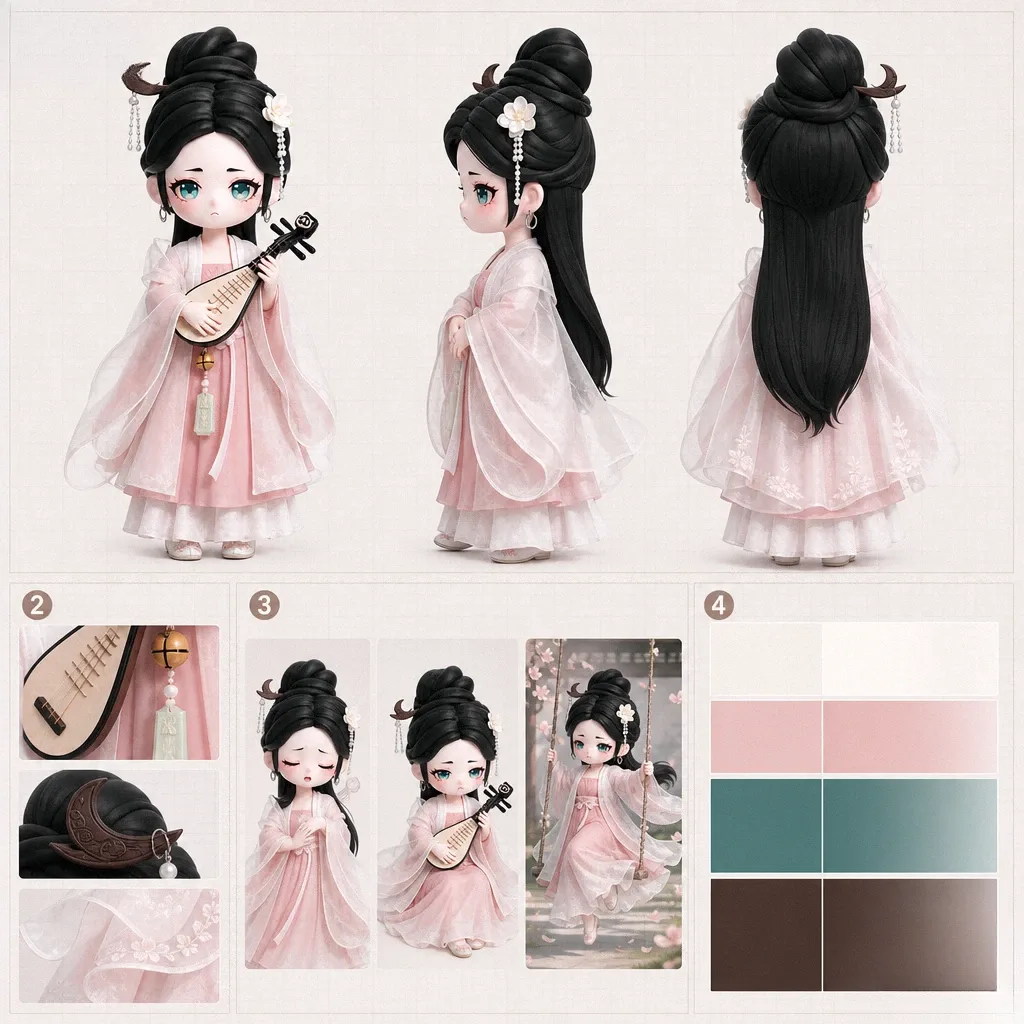
Recommended size 8-12cm (craft setting, size can be smaller). The silk attire is the main highlight: recommend gentle design, attire may use actual silk or simulated silk (satin/glossy), attire may use flowing design (skirt may use transparent or semi-transparent material), attire may use pink/red/gold color scheme (silk color scheme). Weaving shuttle is a separate part, may be detachable, weaving shuttle may use wood/bamboo paint, weaving shuttle may use shuttle shape. Loom is a separate part, may be detachable, loom may use wood-grain paint, loom may use small loom shape. Silk is a separate part, may be detachable, silk may use actual fabric or simulated fabric, silk may use colorful paint (Yunjin/Shu brocade/Song brocade patterns). Su embroidery is a separate part, may be detachable, Su embroidery may use embroidery frame shape, Su embroidery may use embroidery patterns. Silkworm is a separate part, may be detachable, silkworm may use animal shape, silkworm may use white/transparent paint. Headwear/hair bun is a separate part, may be detachable, headwear may use hair bun/flower jewelry/gold jewelry shape. Hands may hold objects (weaving shuttle/silk/embroidery frame). Base may use loom/Silk Road/Su embroidery texture. Overall uses pink/red/gold/white as main tones, conveying the gentle exquisiteness of Si Chou.
Licensing Fit
Suitable for cultural creative brands (silk/Silk Road/Su embroidery theme), cultural tourism (Suzhou/Hangzhou/Chengdu/Silk Road theme), home brands (silk/Chinese style/Su embroidery theme), apparel brands (silk style/gentle style), education brands (silk/traditional culture theme), gift brands (silk/gift theme), and beauty brands (silk/elegant theme). The gentle silk flavor image of Si Chou suits cultural creative and apparel collabs, forming the "silk-ceramics" Chinese craft pairing with Tao Ci.
3D Model Preview
360° rotation, zoom for details, AR preview available on mobile devices
Character Assets
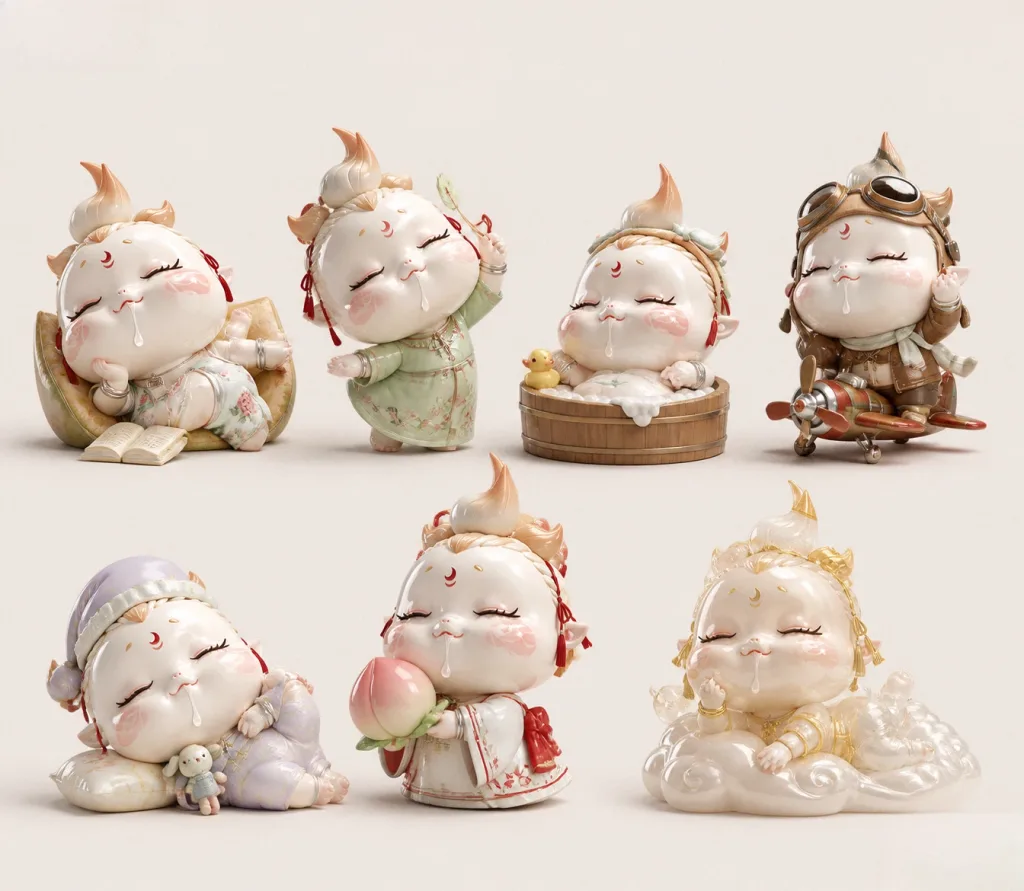
Full set of commercially available assets: illustration, turnaround, extended content, art toys & merch, cultural gifts, and atmosphere art