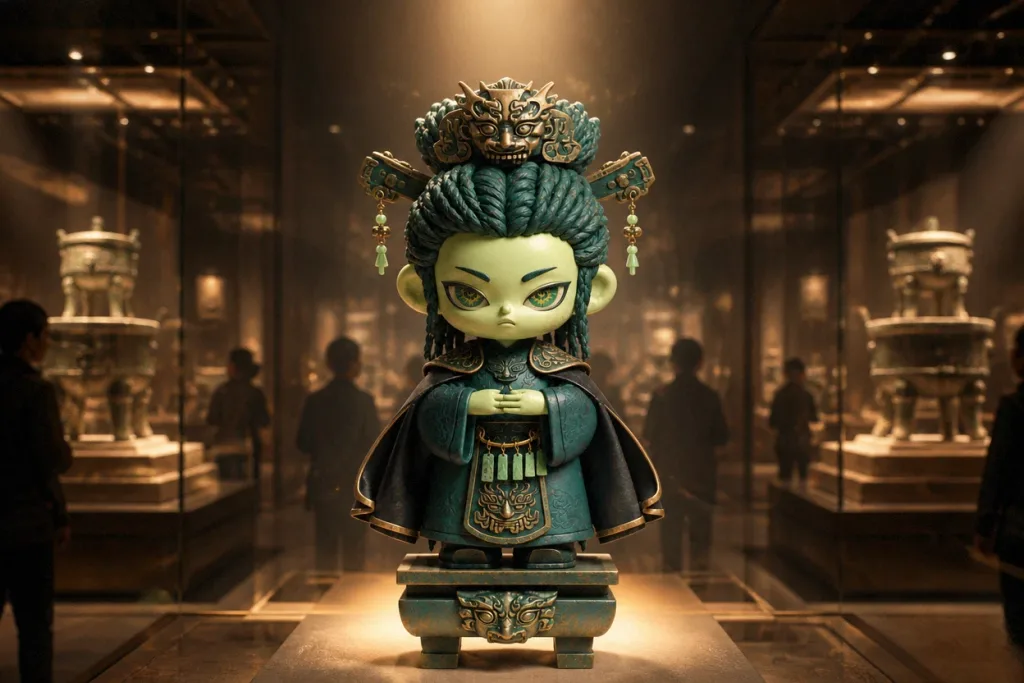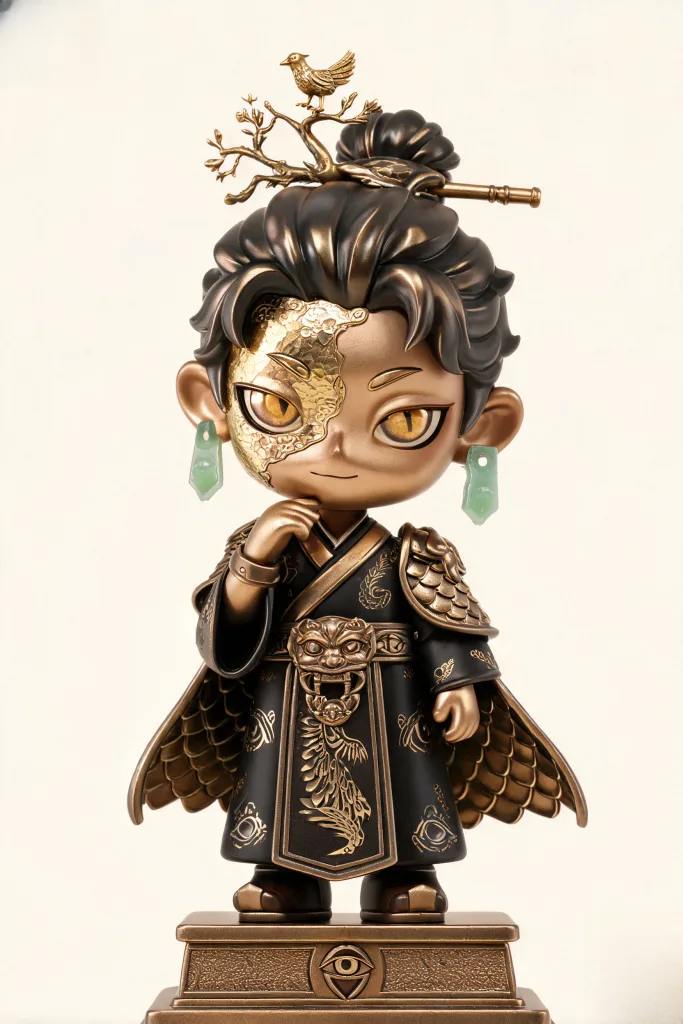
Identity / Role
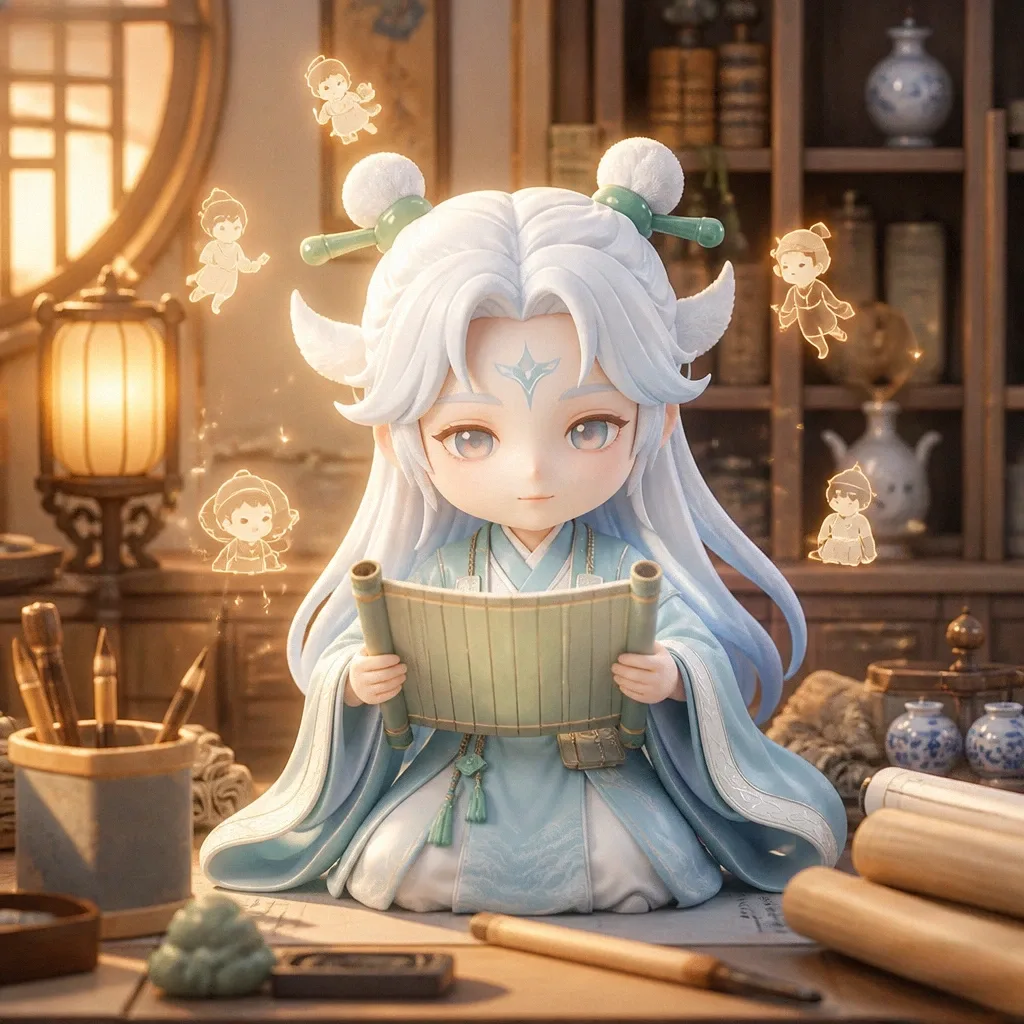
The embodiment of Chinese go culture, guardian of black and white play and the way of go. Wearing scholar attire, holding a go stone, with a go board and landscapes behind him. Wei Qi guards the most wisdom-flavored craft in China — the existence of "black and white play" — conveying the wisdom of go and the depth of the way of go.
Personality
Calm and wise, deep way of go — one of the most wisdom-flavored characters in Zhonghua Baixiang. Speaks calmly and forcefully, loves using go as metaphor, acts calmly and decisively. Has innate pursuit of wisdom, loves playing go, meditating in front of the go board, exploring in the way of go. Calm on the surface, but has坚守 of传承 inside — go is the treasure of scholars, he wants to pass it on. Loves playing go in front of the board, reading in the study, wandering in landscapes. A bit calm, always maintains a thinking posture, but his calmness is not coldness, but the pursuit of wisdom.
Worldview Story
Go is one of the oldest board games in China, also called yi, qi, black and white, with a history of over four thousand years (legend has it that it was made by Emperor Yao, "Yao made go to teach his son Dan Zhu"). Go has black and white stones, the board has 19 lines (19×19), has 361 intersections, the rules are simple but the variations are endless, there is a saying that "there is no same game in a thousand years." Go is an important symbol of Chinese scholar culture, together with the qin, calligraphy, painting are called the "Four Arts of Scholars" (qin qi shu hua). Famous go games include "Sun Ce ordering Lu Fan to play go", "Wang Zhi's rotten axe handle", "Huang Longshi vs Xu Xingyou", "Fan Xiping vs Shi Xiangxia" (ten games at Danghu), etc. Wei Qi's birth originated from a morning in the study. The study shone in the morning light, and a scholar was playing go in front of the board. His go stone fell in his hands, black and white intersected on the board, the game changed in his hands. His scholar attire shone in the morning light, the go stone sparkling in his hands. His board had 19 lines, had 361 intersections, black and white stones, the rules were simple but the variations were endless. He knew the wisdom of go — go is one of the oldest board games in China, with a history of over four thousand years, is an important symbol of Chinese scholar culture. He also knew the stories of go — Yao made go to teach his son Dan Zhu, Wang Zhi's rotten axe handle, Huang Longshi, Xu Xingyou, Fan Xiping, Shi Xiangxia and other go masters. That calmness and wisdom transformed into Wei Qi's spiritual form. Since then, Wei Qi has walked the mortal world as the spirit of craft. He often appears in front of the go board, in the study, in landscapes, guarding the wisdom of go and the power of the way of go. He carries a go stone and a go board — whoever he meets, he tells the wisdom of "black and white play." He often says: "Go is one of the oldest board games in China, with a history of over four thousand years. Black and white play, endless variations, there is no same game in a thousand years. Wisdom is the soul of go. The way of go is our pursuit."
Character Profile
Cultural Origin
Go is one of the oldest board games in China, also called yi, qi, black and white, hand talk, sitting in seclusion, rotten axe handle, etc., with a history of over four thousand years (legend has it that it was made by Emperor Yao, "Yao made go to teach his son Dan Zhu", see "Shi Ben · Zuo Pian", Jin Zhang Hua "Bowu Zhi"). Go rules: ①Board — 19 lines (19×19), has 361 intersections (also has 9-line, 13-line and other small boards, for beginners); ②Stones — black and white, 181 black stones, 180 white stones (or more than 200 each); ③Play — black first, white second, take turns placing stones on intersections, intersections with existing stones cannot be used again; ④Liberties — the adjacent empty intersections of a stone on the board are called "liberties", stones without liberties are captured; ⑤Eyes — empty intersections surrounded by one side's stones are called "eyes", a group with two true eyes is alive; ⑥End of game — when both sides think there is no more move to make, the game ends, count stones to calculate the outcome (Chinese rules: black gives 3 and 3/4 stones, i.e. 7 and a half points). Go features: simple rules but endless variations, there is a saying that "there is no same game in a thousand years" (the number of variations in go is about 10 to the power of 170, far exceeding the number of atoms in the universe); emphasizes comprehensive abilities such as strategy, tactics, calculation, judgment, psychology; has go proverbs such as "gold corners silver sides grass center", "sacrifice stones to gain the lead", "enter the opponent's territory slowly", "when the opponent is strong, protect yourself". Go history: ①Pre-Qin — origin of go, "Zuo Zhuan", "Analects", "Mencius" and other books have records about go; ②Han dynasty — development of go, Ban Gu's "Yi Zhi" is the earliest go theory work in China; ③Wei-Jin — prosperity of go, Wang Can, one of the "Seven Scholars of Jian'an", was good at go, the story of "Wang Zhi's rotten axe handle"; ④Tang-Song — peak of go, Emperor Taizong of Tang, Emperor Xuanzong of Tang, Emperor Xuanzong of Tang and other emperors were good at go, established "qi dai zhao" (go official position), Song dynasty had Liu Zhongfu, Li Yimin and other go masters; ⑤Ming-Qing — peak of go, Ming dynasty had Guo Bailing, Huang Longshi, Xu Xingyou, etc., Qing dynasty had Fan Xiping, Shi Xiangxia, Liang Weijin, Cheng Lanru ("Four Great Masters of the Qing Dynasty"), Fan Xiping and Shi Xiangxia's "ten games at Danghu" is the pinnacle of ancient Chinese go; ⑥Modern — go went global, in 1988 the Fujitsu Cup was founded (the first world professional go tournament), in 2016 AlphaGo defeated Lee Sedol (a milestone in artificial intelligence in the field of go). Go is an important symbol of Chinese scholar culture, together with the qin, calligraphy, painting are called the "Four Arts of Scholars" (qin qi shu hua), in 2008 go was listed in the national intangible cultural heritage list.
Craft & Commercialization
Recommended size 8-12cm (folk craft setting, size can be smaller). The scholar attire is the main highlight: recommend calm design, attire may use pad printing or water-transfer printing (calligraphy/landscape/go patterns), attire may use segmented injection, attire may use elegant color scheme (white/cyan/black). Go board is a separate part, may be detachable, board may use wood-grain paint or realistic wood texture, board may have 19-line engraved lines, board may have foldable design. Go stones are a separate part, may be detachable, stones may use black and white, stones may use jade/glass texture, stones may have magnetic design. Go bowls are a separate part, may be detachable, bowls may use wood-grain paint or realistic wood texture. Hands may hold objects (go stone/board). Base may use go board/study/landscape texture. Overall uses black/white/wood color as main tones, conveying Wei Qi's calm wisdom.
Licensing Fit
Suitable for cultural creative brands (go/black and white/Four Arts of Scholars theme), cultural tourism (go academy/Jiangnan/landscape theme), home brands (go/Chinese style/study room theme), apparel brands (scholar style/calm style), and education brands (go/intellectual development theme). Wei Qi's calm wisdom image suits cultural creative and education collabs, forming the "chess-qin" Four Arts of Scholars pairing with Gu Qin.
3D Model Preview
360° rotation, zoom for details, AR preview available on mobile devices
Character Assets
Full set of commercially available assets: illustration, turnaround, extended content, art toys & merch, cultural gifts, and atmosphere art